
Each picture, a whole world.










Captured various atmospheres across a range of countries with different cameras.
-
Fujifilm X100VI is a fixed-lens compact camera with a 40.2 MP APS-C sensor used for high-quality street, travel, portrait and everyday photography.
Compared with other cameras, it stands out for its portability and retro handling, strong image quality with Fujifilm’s film simulations, and hybrid optical/electronic viewfinder in a small body.
-
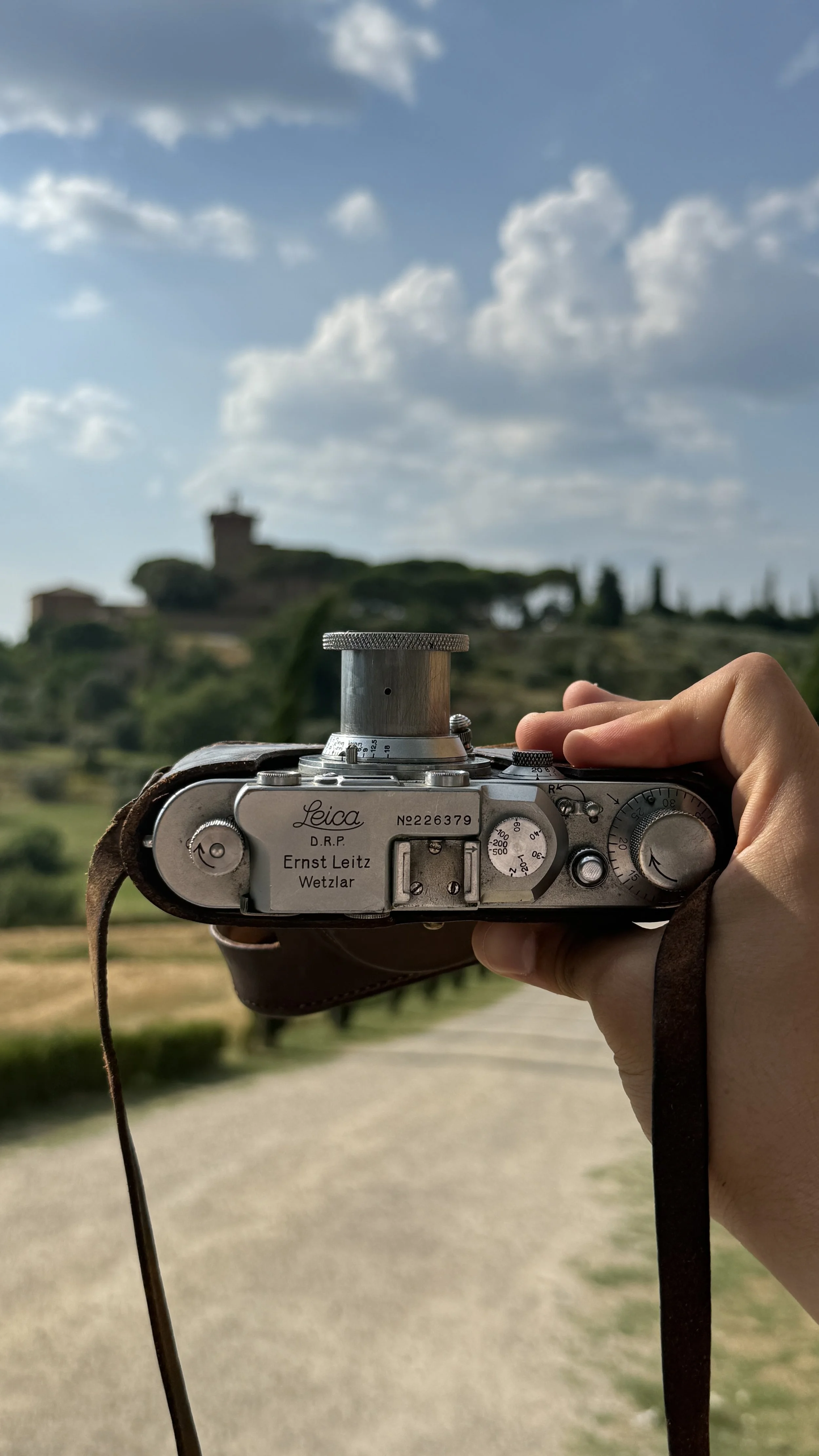
The Leica IIIa is a 35 mm rangefinder camera introduced in 1935, emblematic of early precision German camera engineering.
It was used mainly for reportage and documentary photography thanks to its compact size and reliability.
Its key advantage was portability combined with interchangeable lenses, which helped establish the Leica standard for modern photography. -
The Olympus Mju II is a compact 35 mm point-and-shoot film camera with a fixed 35 mm f/2.8 lens.
It was designed for everyday and travel photography thanks to its fully automatic operation and weather-resistant body.
Its main advantages are extreme portability, a sharp lens for a compact camera, and reliable autofocus, making it iconic among film point-and-shoots.